Welcome to HimVishnoi.com - The site where you get only the Best!

This is an example of a Optin Form, you could edit this to put information about yourself or your site so readers know where you are coming from. Find out more...


Following are the some of the Advantages of Opt-in Form :-

  • Easy to Setup and use.
  • It Can Generate more email subscribers.
  • It’s beautiful on every screen size (try resizing your browser!)
Showing posts with label GK. Show all posts

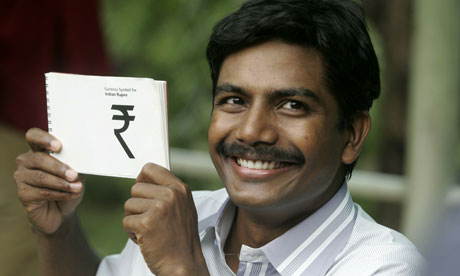
Rupee gets its symbol..IIT-ian's design selected

  • NEW DELHI: The Indian rupee will soon have a unique symbol — a blend of the Devanagri 'Ra' and Roman 'R' — joining elite currencies like the US dollar, euro, British pound and Japanese yen in having a distinct identity.
  • The new symbol, designed by Bombay IIT post-graduate D Udaya Kumar, was approved by the cabinet today — reflecting that the Indian currency, backed by an over-trillion dollar economy, was finally making its presence felt on the international scene.
Read More

Sports Update - 2010 upto July

FIFA World Cup 2010:
The 2010 FIFA World Cup was the 19th FIFA World Cup that took lace in South Africa from 11 June to 11 July 2010. The 2010 finals marked the first time a European nation had won the tournament outside of its home continent, as well as the first time that two different European teams had become world champions in succession.
Spain got their first ever FIFA world cup.
Read More

ISRO launched PSLV C-15

Indian Space Research Organisation (ISRO) chairman K. Radhakrishnan could not have been happier than he was on Monday morning, when the agency's polar satellite launch vehicle (PSLV) launched five satellites without a hitch. Radhakrishnan was particularly happy that economist Montek Singh Ahluwalia, deputy chairman of the Planning Commission, was present at the control room to watch the launch.The 17th flight of PSLV C-15 successfully launched five satellites:
  1. The 694 kg Indian remote sensing satellite (IRS) CARTOSAT-2B, which is its main payload;
  2. the 116 kg ALSAT-2A of Algeria, 
  3. 6.5 kg NLS-6.1 AISSAT-1 of Canada, 
  4. NLS-6.2 TISAT of Switzerland and,
  5. STUDSAT, a picosatellite weighing less than 1 kg built by a consortium of seven engineering colleges in Bangalore and Hyderabad.

Read More

Prime Minister of India

The Prime Minister of India is the real pivot (like Sun) around which the whole government system (Planetary System) revolves. In India there is the parliamentary form of Government and in this context the Prime Minister technically becomes the head of federal republic who holds the effective responsibility of executive powers.

As the leader of majority party in lower house (Lok Sabha) of the Legislature, The Prime Minister is called upon and appointed by the President. During the appointment the Prime Minister has to be the member of either house of Parliament or he/she has to get elected within six months after appointment. On the advice of Prime Minister the President forms the Central Cabinet. The Prime Minister of India is real head of the Government who enjoys the executive powers and performs the functions to decide the policies of the Government. The powers of coordination among the various Ministries, heading of the Cabinet meetings resides in the hands of Prime Minister.
Read More

Constitution of India-Articles

In this section of India Facts we discuss about Constitution of India - Articles. You get all the articles i.e. Part I to Part XXII, in details. In these Part I to Part XXII you will learn about 395 articles. Article 123 explains about the legislative powers of the President and article 213 is for the legislative powers of the Governor. Article 300A is important for everyone because it explains about Right to Property. Check out yourself all the articls under different chapters and Parts.
Read More

Constitution of India-Preamble

The Preamble highlights few fundamental values and guiding principles on which the Constitution of India is based. It serves as the guiding light for both, the Constitution as well as the judges who interpret the Constitution in its light. The opening few words of the Preamble - "We, the people" - signifies that the power is vested in the hands of the people of India. The Preamble is as follows:
Read More

Presidents of India

he President of India is the constitutional head in federal republic government structure of India. President of India is the first citizen of India and according to the Article 53, part V, of the Indian constitution the President possesses the supreme executive power and is the supreme commander of Indian Armed Forces. The President of India represents the nation but does not not rule the nation, He/She has to act according to the advice of the Council of Ministers which is headed by the Prime Minister.
Read More

Vice Presidents of India

As per the article 63, part V the Vice-President of India is the ex-officio chairman of the Council of States (Rajya Sabha). In the Executive branch of the Union of India, the Vice-President is the second highest ranking government official. The Vice President is authorised to act as President in the event of death, resignation or removal and in the absence or illness of the President.
Read More

Geography of India

Location of India : 20 00 N, 77 00 E
Continent : Asia
Time Zone : GMT + 05:30 Hours

India, the seventh largest country in the world, occupies 2.4% of the world's land area. The geographical features of the country is extremely diverse. It has landscape of snow-capped mountain ranges, deserts, plains, hills and plateaus. The climate also has a diversification. It is equatorial in the extreme south and tundra in the Himalayan altitudes. The complete geographical details are as given below:
Read More

What is a Currency Chest?

India is the seventh-largest country by geographical area, the second-most populous country with over 1.18 billion people. The Reserve Bank of India is responsible for issuing coins and notes to the public on demand and for maintaining the quality of the notes issued. Several agencies are involved in the printing and distribution of the currency (notes and coins of various denominations). Some of them are Govt. mint, RBI press, Government press and banks designated as currency chests.
In order to satisfactorily discharge this duty without recourse, the RBI maintains currency chests of its own at treasuries and branches of the banks at all important centres. The currency notes printed at the press flow to the RBI offices and from the RBI office to these currency chests before they reach the public. The same is for coins which are minted in 4 mints then taken to 4 mint related RBI offices from where they are taken to currency chests to distribute in the market.
In summary: Distribution of notes and coins throughout the country is done through designated bank branches, called chests. Chest is a receptacle in a commercial bank to store notes and coins on behalf of the Reserve Bank. Deposit into chest leads to credit of the commercial bank’s account and withdrawal, debit.
The Functions of the Currency Chests are:
1. The major functions of the currency chests are:
2. To meet currency requirement of public
3. To withdraw unfit notes
4. To provide exchange facility from one denomination to another
5. To make payment requirement of the Government
6. To exchange the mutilated notes
7. To avoid frequent movement of cash
Apart from having its own chests at certain places, RBI also has arrangements with other banks which are entrusted with custody of the currency notes and coins for the same purpose. Related Posts with Thumbnails
Read More

Number of districts in India

Uttar Pradesh has the largest number of districts in India. Uttar Pradesh has 71 Districts followed by Madhya Pradesh - 50, Bihar-38 Maharashtra - 35 & Rajasthan-33 districts. Here please note that :

* Kanshi Ram Nagar is 71st district of Uttar Pradesh which consists of Kasganj, Patiali and Sahawar tehsils, seperated from Etah and established in 15 april 2008.

* Andaman and Nicobar Islands has 3 districts, Goa has 2 , Daman & Diu has 2 districts. Chandigarh, Dadra and Nagar Haveli, Lakshadweep have 1 district each.

* Earlier the largest district of India was Midnapore and it was bifurcated in 2002.

* Katch in Gujarat is the largest district in terms of area (45,652 sq. kms). Bhuj is not a district, Bhuj is district headquarter of Katch.

* Ladakh, a part of Jammu & Kashmir State in north of India consisting of two districts Leh and Kargil.

* Leh with an area of 45110 Sq Km makes it second largest district in the country in terms of area.
Read More

Biosphere Reserves in India

Sixteen Biosphere Reserves have been designated in India . They are


1. Nilgiri (Tamil Nadu, Kerala and Karnataka)
2. Nanda Devi (Uttrakhand),
3. Nokrek (Meghalaya)
4. Manas (Assma)
5. Dibru-Saikhowa (Assam),
6. Sundarban (West Bengal),
7. Gulf of Mannar (Tamil Nadu),
8. Great Nicobar (Andaman & Nicobar Islands),
9. Similipal (Orissa),
10. Dehang-Debang (Arunachal Pradesh),
11. Khangchendzonga (Sikkim),
12. Pachmarhi (Madhya Pradesh),
13. Achanakmar-Amarkantak (Chattisgarh and Madhya Pradesh),
14. Agasthyamalai (Tamil Nadu and Kerala),
15. Katchchh (Gujarat) and
16. Cold Desert (Himachal Pradesh).
Read More

Global Peace Index 2010

What is Global Peace Index?The Institute for Economics and Peace (IEP) is a global non-profit research organization headquartered in Sydney, Australia with a branch in Washington, D.C. The core asset of this institution is the Global Peace Index (GPI), which is now considered the benchmark study in measuring peace.

The Global Peace Index (GPI) is an attempt of the Institute for Economics and Peace (IEP) to measure the relative position of nations’ and regions’ peacefulness. The Institute for Economics and Peace develops this index in consultation with an international panel of peace experts from peace institutes and think tanks with data collected and collated by the Economist Intelligence Unit.

Read More

South African President's India Visit

On June 2, 2010, South African President Jacob Zuma arrived in India to begin his three-day state visit. This was his first visit to India and he was accompanied by a delegation of 200 prominent businessmen. This was also his first visit to an Asian Country. Three pacts were signed during his visit.
Both the countries agreed to support each other’s candidatures for the non-permanent seat for the 2011-2012 term. Both India and South Africa are also in race for permanent birth in the global body.
The three agreements were as follows:
Read More

Current Affairs-1

67. Who was the famous Indian musician in charge of the opening music at the Summer Olympics in Atlanta in 1996?
Answer:
Ustad Zakir Hussain

66. Who was the first Indian to participate in the Olympic Games?
Answer:
Norman G Pritchard

65. Which famous Indian actor was honored with the Dadasaheb Phalke Award in 1994?
Answer:
Dilip Kumar

64. Who was the first Indian to join the Indian Civil Services?
Answer:
Satyendranath Tagore

63. Who was the first Indian to be honored with the Param Vir Chakra?
Answer:
Major Som Nath Sharma

May 30, 2010:
62. Name the first woman Chief Minister of India.
Answer:
Sucheta Kriplani

61. Who was the first woman to become the Lt. General of the Indian Army?
Answer:
Lt General (Mrs) Punita Arora

60. Name the first Indian who got an Oscar.
Answer:
Bhanu Athaiya (Best Costume Designer for Richard Attenborough’s film Gandhi in 1982)

59. Who was the first Indian to be honored by the Royal Society in the field of Science?
Answer:
Sir Jagadish Chandra Bose
Read More

Banking Terms-1

Banking Terms
1. Providing credit facilities by more than one banks for single party with formal agreement with each other. What is this concept called?
Consortium
2. Rate at which RBI purchases or rediscounts bills of exchange of
commercial banks. What this rate is called?
Bank Rate
3. An instrument in the form of depository receipt created by an Indian depository against underlying equity shares of the issuing company.
Indian Depository

Read More

Economic,Commercial,Trade,Banking Terms

ARBITRATION Referring dispute to disinterested party called arbitrator for decision, which will be binding.
ANNUITY Payment of a fixed amount periodically for a limited time. It is an investment on which the owner receives not only interest on his money but also return of his capital.
BALANCE OF TRADE The difference between the value of imports and exports. It is favourable when the value of exported goods exceeds the value of imported goods. If it is reverse balance is unfavourable.
BALANCE SHEET Statements of accounts, generally os a business house prepared at the end of a year, showing debits and credits under broad heads, in order to find out the profit and loss positions in the outgoing year.
BARTER Exchange of commodity with other commodities without the interface of any form of currency.
BOND Document by which a government, a company or a person agrees to pay a sum of money in a certain time.
BUDGET Annual estimate of expenditure and revenue of a country or a subordinate authority like a corporation.
BILL OF EXCHANGE Written order by a drawer to pay sum on given date ot named payee.
BUYER’S MARKET An economic phenomenon where there are more goods in market than demanded and so the buyers can dictate the prices of goods.
CLEARING HOUSE Place where officials of the banks meet daily to exchange cheques drawn on the respective banks and settle the account by the payment of balances only.
COOPERATIVE FARMING Joint farming wherein farmers pool their land, capital and resources and divide the produce at the end of the harvest in proportion to their land put in the pool. The farmers retain their proprietary rights.
CEILING ON LAND AND HOLDING Imposition of a maximum limit of the land which an individual should have. Its purpose is rational distribution of land.
DEATH DUTY (ESTATE DUTY) A sort of tax imposed on the property inherited at death of its previous owner.
DEVALUATION Government’s step to reduce the value of its own currency relatively to a foreign currency. It aims to increase exports and reduce imports.
DEFLATION A monetary state characterised by decrease in the supply of money and bank deposits and falling profits, wages, incomes and employment accompanied by unemployment and falling prices.
DEMONETISATION The governmental measure of depriving metallic coins or paper currency od specified denominations of its status money. It is meant to unearth the hidden money which is unaccounted for purpose of income tax assessment.
EXCISE DUTY Duty levied on goods manufactured within the country.
FOREIGN EXCHANGE Transfer of money of one country to another.
INFLATION Increase in the quality of money in circulation without any corresponding increase in goods; so, it leads to rising prices spiral.
LAISSEZ FAIRE An individualistic theory advocating private initiative in trade and non-interference by State in commercial or business ventures.
LOCKOUT Closure of a factory by owners to force the workers to accept the imposed terms.
MALTHUSIAN THEORY OF POPULATION It states that the food supply increase in arithmetical progression while population increase by geometrical progression resulting in over-population.
OCTROI Tax imposed on articles coming inside a city.
PUBLIC SECTOR Applies to State enterprises or undertaking.
RECESSION An economic phenomenon characterised by excessive production, less demand, tight money market.
SOFT CURRENCY Currency of a country with which we have favourable balance of trade.
STERLING AREA Group of countries of Commonwealth (except Canada) keeping their reserves in sterling and not gold or dollars.
TARIFFS Measures undertaking by one country to protect industry against trade competition from outside
Read More